Pond filters
A high-quality pond filter is essential for clear water and stable water parameters in any garden or koi pond. In this category you will find a wide range of filtration systems, from complete filter setups to specialised solutions for mechanical or biological filtration.
Many systems combine mechanical filtration, which removes debris and suspended particles, with biological filtration, where beneficial bacteria break down harmful substances such as ammonia and nitrite. Modern drum filters are especially effective for automatic pre-filtration, while powerful biological towers can hold large volumes of filter media such as Hel-X.
Whether you need a complete filtration system, a filter set with pump or replacement parts, you will find pond filters suitable for different pond sizes and filtration requirements here.
6 subcategories · 85 items
-
Show all 11
Oase drum filter
11 items -
Show all 39
Inazuma accessories & spare parts
39 items -
Show all 10
Beadfilter
10 items -
Show all 10
Bio tower / biological Filters
10 items - Show all 3
-
Show all 12
Filter construction & Filter media
12 items
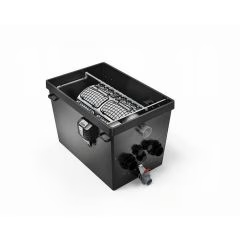

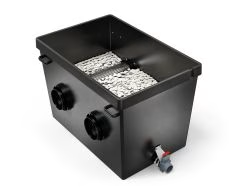
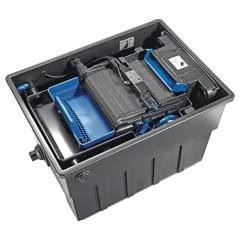
Popular in Pond filters
Frequently Asked Questions
Which pond filter is best for a koi pond?
Koi ponds require powerful filtration systems because koi produce a significant biological load in the water. A common solution is a combination of a drum filter for mechanical filtration and a biological filter or bio tower for biological filtration. This setup effectively removes debris while maintaining stable water quality.
What is the difference between mechanical and biological pond filtration?
A mechanical filter removes visible debris such as fish waste, food leftovers and leaves. A biological filter contains filter media where beneficial bacteria grow and convert ammonia and nitrite into less harmful nitrate. Many modern pond filtration systems combine both filtration stages.
Do I need a pump for my pond filter?
Yes. In most pond systems a pond pump ensures that water continuously flows through the filter system. Some filters are available as complete sets including a pump, while others are designed to be combined with a separately selected pump.
Which pond filter is suitable for large ponds?
For larger ponds or koi ponds, drum filter systems with large biological chambers or powerful bio towers with large volumes of filter media are often used. These systems can handle large water volumes and maintain stable water parameters even in heavily stocked ponds.
Why a powerful pond filter is essential
A reliable filtration system is the heart of any healthy pond. Without proper filtration, organic waste accumulates in the water, leading to cloudy water, algae growth and unstable water parameters.
In every pond, organic substances are constantly produced by fish waste, leftover food, plant debris and dust. These materials initially appear as suspended particles, but eventually break down into ammonia, nitrite and nitrate.
In koi ponds especially, this biological load can increase quickly. A powerful pond filter system therefore performs two critical tasks:
- removing solid waste from the water
- biologically breaking down harmful substances
Only when both processes work efficiently can the pond remain clear and healthy for fish and beneficial microorganisms.
Mechanical filtration – the first step of pond filtration
Mechanical filtration removes solid particles from the water before they can decompose.
Typical particles removed include:
- fish waste
- uneaten fish food
- algae particles
- leaves and debris
Modern filtration systems often use drum filters for this stage. In a drum filter, pond water flows through a fine mesh screen. Solid particles remain on the surface of the screen and are automatically rinsed away.
The advantage of this technology is continuous cleaning. This means far less waste reaches the biological filter stage, making the entire filtration system more stable and efficient.
For heavily stocked ponds or koi ponds, drum filters are therefore a particularly popular solution.
Biological filtration – breaking down harmful substances
Once solid waste has been removed, biological filtration begins. This stage relies on beneficial bacteria that colonise filter media and convert harmful substances in the water.
These bacteria carry out a process called nitrification:
- ammonia → nitrite
- nitrite → nitrate
This process is essential for maintaining stable water quality in a pond.
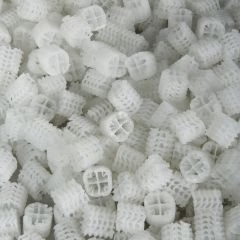
To support bacterial growth, filtration systems need large surface areas. Modern filter media such as Hel-X provide enormous surface areas for bacterial colonisation.
Many high-performance filtration systems therefore use large biological chambers or bio towers that can hold hundreds of litres of filter media.
Drum filters for koi ponds
Drum filters are among the most efficient mechanical filtration systems used in pond technology today. They remove debris at the very first stage of filtration.
The process works as follows:
- pond water flows through a fine screen
- debris remains on the screen surface
- sensors detect rising water levels
- an automatic rinse cycle cleans the screen
This ensures a constant water flow and long-term filtration efficiency.
Especially when combined with a large biological filtration stage, drum filters are ideal for:
- koi ponds
- large garden ponds
- heavily stocked fish ponds
Many modern systems are also available as complete filtration systems, where drum filters and biological filtration are already perfectly combined.
Bio towers – maximum biological filtration
Besides traditional multi-chamber filters, bio towers are another popular solution for biological pond filtration. They provide large volumes for moving filter media such as Hel-X.
Strong aeration keeps the filter media in constant motion, resulting in:
- a large active bacterial surface area
- optimal oxygen supply
- highly efficient breakdown of harmful substances
Bio towers are often installed after mechanical filtration such as drum filters. This combination creates a highly efficient filtration system and is commonly used in professional koi pond setups.
Complete pond filtration systems
Depending on pond size and fish population, different filtration systems are required. Smaller garden ponds may use compact filtration systems, while larger ponds require more powerful solutions.
Many filtration systems are therefore available as complete filter sets, which may include:
- pond filter unit
- pond pump
- filter media
- fittings and accessories
These complete systems simplify installation and ensure that all components work together efficiently. Want us to plan and build your ideal setup?
Choosing the right pond filter
Selecting the correct pond filter depends on several factors:
- pond volume
- fish population (especially koi)
- desired water quality
- existing pond technology
Koi ponds generally require much more powerful filtration than traditional garden ponds. Therefore, filtration systems with drum filters and large biological chambers are commonly used.
The filtration system should also work in combination with other such as , and to achieve optimal water quality.